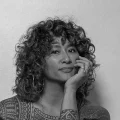
There was a time I thought I was healing.
I had the words down. The rituals. The aesthetic. Palo santo curling through Instagram livestreams. Combat veteran turned artist. I’d speak softly in front of a half-finished painting, ring light warm on my skin, reciting truths I hadn’t earned yet.
“Turn pain into power,” I’d say. “Alchemy isn’t pretty.”
But behind the brushstrokes, I was unraveling. Quietly. Beautifully. Like a curated collapse. Mornings, coke. Evenings: Percocet. Uppers and downers moving through my bloodstream with the same precision I once reserved for mission prep.
What broke me wasn’t the war itself—it was the silence that came after. Back then, silence didn’t mean peace; it meant absence—no mission, no orders, no one saying my name. Later, I’d learn a different kind of silence, but at first it felt like a void.
In Afghanistan, I knew who I was and what I was there to do. Coming home, I had no mission, no ruck to pack, no one telling me where to be.
The masks I had worn—soldier, achiever, the strong one—began collapsing. Drinking and pills stopped working the way they used to. I filled the void with more: more substances, more people, more distractions. And slowly, I drowned in my own noise.
I told myself I was transmuting, that I was turning trauma into art. But I wasn’t painting truth. I was painting hope—that someone else would believe I was okay, so I could too.
Online, I became a curated version of myself. On TikTok and Instagram, I went live for hours, painting like a female Bob Ross hybrid. Sometimes it was rituals, sometimes trending skits, sometimes thirst traps at the range. At one point, I had 700,000 followers and 11 million likes. I told myself I was inspiring people. Validation kept me going even when I wasn’t okay.
I had learned performance early. First, in a house that turned silent after I stopped pretending to be all right. Then at the recruiting office at 17, sitting in basketball shorts and damp hair, nodding at every pitch a stranger gave me. I didn’t enlist for glory. I was carrying childhood sexual trauma I had never named, later compounded by operational loss and moral injury.
I attended basic. AIT. Germany. Then, NSA Hawaii, reading lives through audio feeds while mine dissolved off-script. And then Cultural Support Team selection, gravel at Fort Bragg grinding softness out of my bones. The first official class of women. Rucks. Lanes. Rifle qualifications. No smiles. Just silence, sweat, and protocol.

Eventually, Afghanistan. Red Squadron. Logar Province. Briefing SEALs who never said my name but learned to trust my intel. I did my job holding two truths at once—the cultural nuance of the women we were there to reach, and my own unresolved trauma—while moving through villages saturated with everyone else’s grief. I was splitting in half.
After my tour came the silence, the sudden loss of purpose, the flood of memories I had no tools to hold. I thought I could outpace it with achievement, but what I really did was spiral.
Stateside, I tried to convert memory into meaning. Quit my job and called it freedom. Moved in with a man who believed in my art as much as he believed in his next high.
What I was chasing wasn’t just meaning; it was control. Redemption. A chance to prove to my family, to myself, to the world, that I wasn’t just a soldier anymore. That I could be an artist. That I could build a new identity strong enough to eclipse the old one.
Our loft became the stage. I quit a respected ad agency job to pursue painting full-time, while he chased music. We told ourselves the loft was sacred—30-foot ceilings, concrete floors, incense smoke curling. But really, it was a temple to mutual collapse.
What we were really doing was dying beautifully. The collapse was quiet. Predictable. Ritualized.
Then one day, I blacked out. Dissociation so complete I came to in a wrecked room, sunlight slashing across furniture I didn’t remember tossing. No bruises. No memory. Just knowing. This wasn’t a bad night, this was my body saying, “Get the fuck out.”
So I did.

I ended up in a healing center in Mexico. Not for a yoga retreat. Not for escape. For ibogaine. I had reached out to a doctor known for treating veterans with psychedelic-assisted healing. I didn’t want a vacation. I wanted a lifeline.
They didn’t ask for my story. Just my intention.
“I want to let go,” I said.
I laid back in a darkened room, eye mask on, music low. I expected beauty. What came instead was static. Bone. Teeth. My own voice layered with the ones I tried to bury. “You don’t get to keep what you built on a lie,” it whispered.
I saw myself—not enlightened, not evolved. Performed. Curated. Captions soaked in cocaine sweat and code-switching. I’d spent years performing healing I hadn’t allowed myself to begin. One identity after another—soldier, artist, addict, healer—unraveling like threads pulled from tactical gear after a blast.
The hardest role to release? The Strong One. The one who never asked for help. The one who figured it out. She stared at me from one of the medicine-induced visions, jaw clenched, eyes wild with refusal.
I didn’t want to let her go. She’d kept me alive.
But then I heard it—not a thought, a knowing: “You can’t take them with you.”
Something tore across my chest. Not a metaphor. Somatic. Hot. Clean. Honest. Like an IED discharging inside the emotional fascia. A breach—not into destruction, but into release.
And that’s when I sobbed.
Not from pain, but grief: for the girl who survived so well that the world called it strength; for the soldier who could lead a mission but still flinched when loved; for the woman who kept performing because silence felt more familiar than rest.
When I woke the next morning, I wasn’t enlightened. I was raw. Drenched in sweat. Limbs trembling. Eyes open. Breath shallow, but mine.
Back in the States, I didn’t tell anyone.
No livestream. No glossy “10 Lessons From Ibogaine” carousel. Just silence.
At first, that silence felt like an absence. But later—after completing an intensive leadership and emotional intelligence training where I finally screamed out the rage I’d swallowed for decades—it began to feel like presence. It wasn’t therapy. It was a mirror. And for the first time, I stopped performing long enough to see myself.

That clarity is what allowed me to return to social media differently; not for dopamine or validation, but as a tool of service.
The first change I made wasn’t dramatic. I stopped sleeping with my phone. No more waking to dopamine notifications. No more feeding the algorithm before I fed myself.
That’s what ibogaine gave me—not transformation, not transcendence. A pause. A sacred pause between the impulse and the performance.
I haven’t used opiates since that night. No cravings. No bargaining. No loops. Just my breath, and almost one year free of cocaine.
But I relapsed into cocaine after moving to a new city, alone, trying to start over with a new job, a new apartment, a new dog. My friends had betrayed me. My relationship had collapsed. And without community, the spiral pulled me back.
What saved me wasn’t willpower; it was learning to love myself in real time. Learning to rage in the gym, paint through grief, breathe when the triggers come. That jagged truth is what sobriety really looks like.
I use different rituals now—gym, art, journaling, breathwork—not as performance, but as anchors. They are how I return to myself when the old voices rise.
Because healing isn’t linear. And it isn’t branded. And it sure as hell isn’t clean. Healing has looked like relapsing and returning, raging and integrating, breaking and remembering. It isn’t a miracle cure. It’s a messy commitment to keep coming back.
This War Horse Reflection was edited by Kim Vo, fact-checked by Jess Rohan, and copy-edited by Mollie Turnbull. Hrisanthi Pickett wrote the headlines.